This conference focusing on AM of soft materials assembles diverse communities of researchers from both academia and industry, with the aim of covering a broad scope of angles from new printing technologies and the integration of digital design, to multiscale simulations, artificial intelligence and machine learning, multimodality manufacturing methods, material synthesis, multi-material printing, composite manufacturing, and performance engineering materials.
AM invites a diverse cadre of researchers, from sustainability scientists and manufacturing engineers to entrepreneurs, as well as drawing on a wide range of materials expertise — from thermosets, vitrimers, and thermoplastics to hydrogels, organogels, and composites — for various AM technologies.
2027 ORGANIZING COMMITTEE
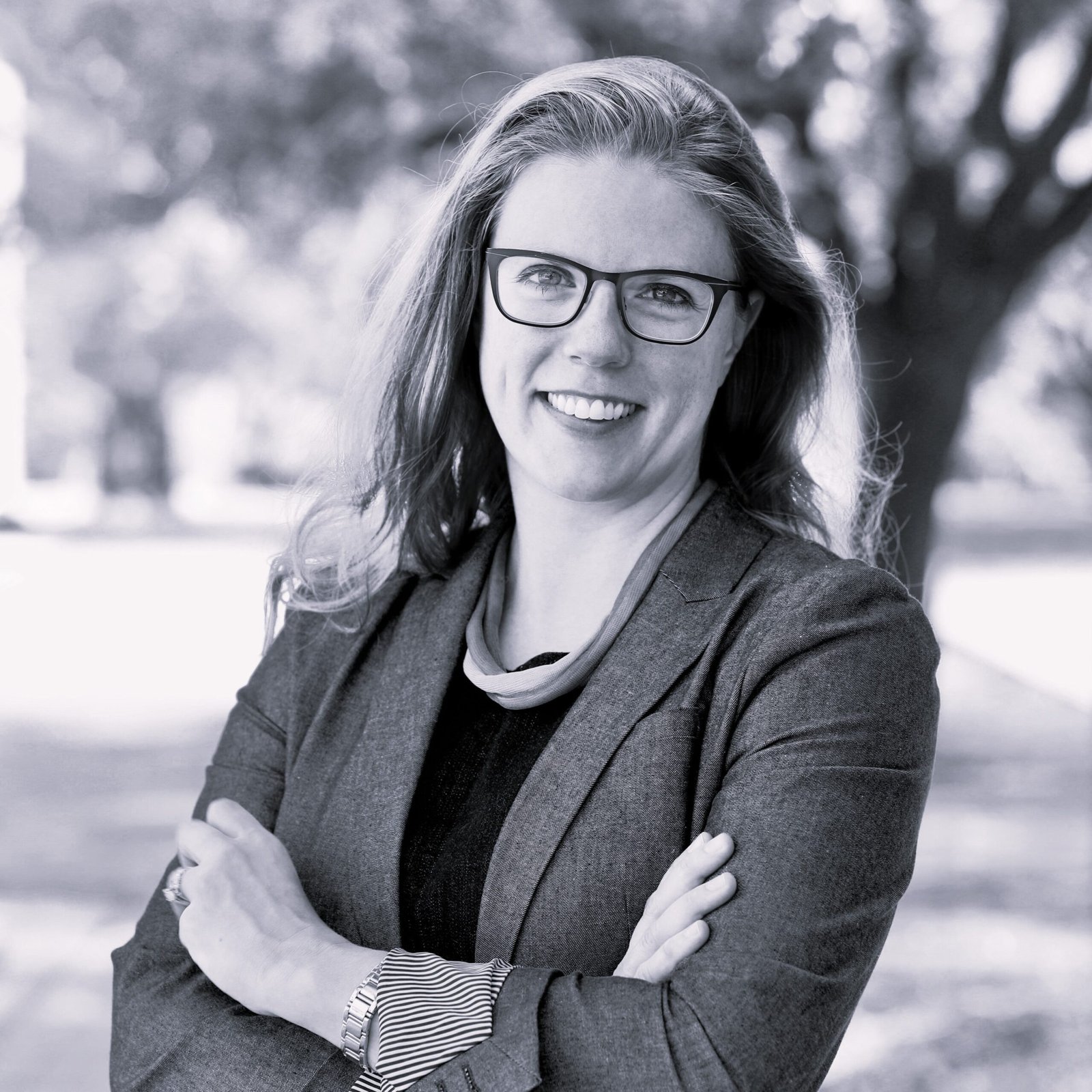
Emily Pentzer
Texas A&M University, USA
Emily Pentzer is Senior Associate Dean for Research at the College of Arts & Sciences and professor of Chemistry and Materials Science and Engineering at Texas A&M University, USA where she is also a Presidential Impact Fellow. Her work addresses the design, synthesis, and application of composite polymer materials for energy related applications, converging synthesis and processing. Prof. Pentzer currently serves as the inaugural Editor in Chief of RSC Applied Polymers (since 2023) and is a member of the 3rd cohort of the New Voices program at the US National Academies of Science, Engineering, and Medicine.

Christophe Moser
École polytechnique fédérale de Lausanne, Switzerland
Christophe Moser is Full Professor of Electrical and MicroEngineering at EPFL. He obtained his master and PhD in Electrical Engineering from the Caltech in 2000. He was the co-founder and CEO of Ondax from 2000-2010 before joining the Faculty at EPFL. He is known for advancing significantly the area of volume-holographic optical devices by building two successful companies: Ondax Inc., acquired by Coherent and Composyt Light labs, acquired by Intel Corporation.
His current research include 1. Volumetric Additive manufacturing (VAM) using single and two photons. 2. Using optics to do computing for AI to increase processing speed and lower power consumption. 3. wavefront shaping to turn multimode fibers into the thinnest endoscopic microscopes. He is the author and co-author of over 100 peer reviewed publications and over 60 patents.

Riccardo Levato
Utrecht University, Netherlands
Riccardo Levato is Associate Professor at Utrecht University, at the University Medical Center Utrecht, and at the Regenerative Medicine Center Utrecht (Netherlands). His research focuses on developing lab-made tissues and designer organoids for personalized therapies and regenerative medicine, and as advanced in vitro models for drug discovery. His team develops advanced light-based printing techniques and high-throughput volumetric printing, in combination with smart cell-instructive biomaterials. Key applications include musculoskeletal, liver, pancreas and vascular tissue engineering.
He co-authored >90 papers and several patents and supervised 25 PhD students and 11 postdocs. He received the Jean Leray and Robert Brown awards from the European Society for Biomaterials and from TERMIS, the mid-career investigator award from the International Society for Biofabrication, and the 2025 O&J Peters International prize for research in production engineering. He is a two-times ERC laureate, and he serves on the board of directors of the International Society for Biofabrication.
2027 SCIENTIFIC COMMITTEE
We are still defining the scientific committee for this edition!
Thank you for the patience